

Author: Terence Critchlow
-

#101 Limitless 2026 Review
I attended the Limitless Expo in August and left with a stronger network and new insights. Ken McElroy and Tarl Yarber host the event, and although both are well known real estate investors, the conference covers far more than real estate. This year, speakers addressed artificial intelligence and broader economic trends alongside sessions focused on…
-
#100 What Comes Next for This Newsletter
In January 2023, I published the first article in this newsletter. Since then, I have written about My own investment strategy evolved during this period. I once considered sponsoring my own syndication, acting as the General Partner and raising money from investors for a self storage deal. After looking closely at that option, and getting…
-
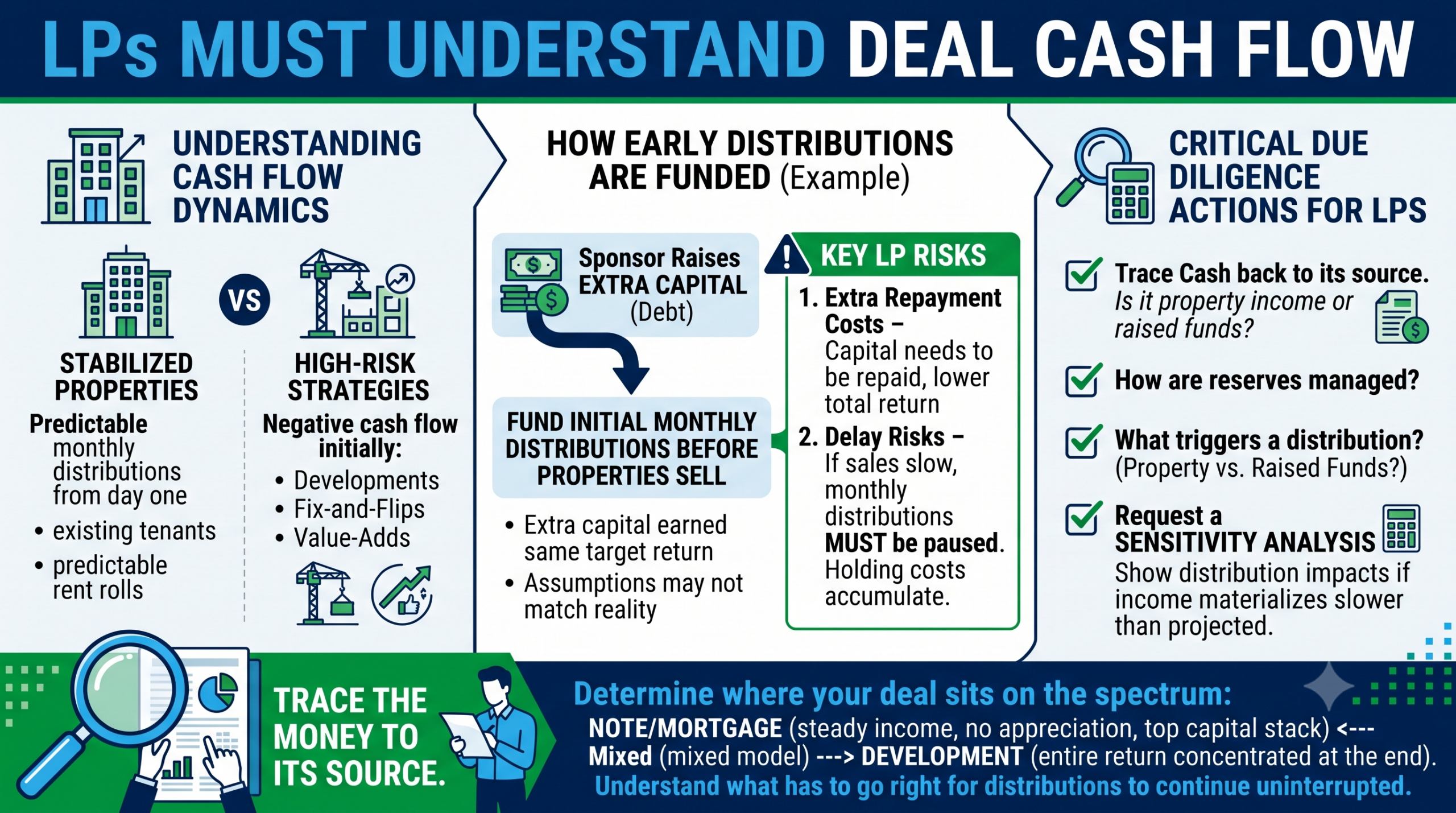
#99 LPs Must Understand the Deal Cashflow
Most LPs assume that when a sponsor promises monthly distributions, the property already generates enough income to cover those payments. This assumption holds true for certain deals such as stabilized properties with existing tenants and predictable rent rolls. However, for development projects, fix and flip strategies, and heavy value add opportunities, that assumption often does…
-
#98 Book Review: Extreme Ownership: How U.S. Navy SEALs Lead and Win
I recently re-read Extreme Ownership by by Jocko Willink and Leif Babin as part of the Money Mental Book Club. I liked it even better the second time. The core thesis of the book is simple to state and difficult to practice. To succeed, a person must take complete ownership of their current situation, treat…
-
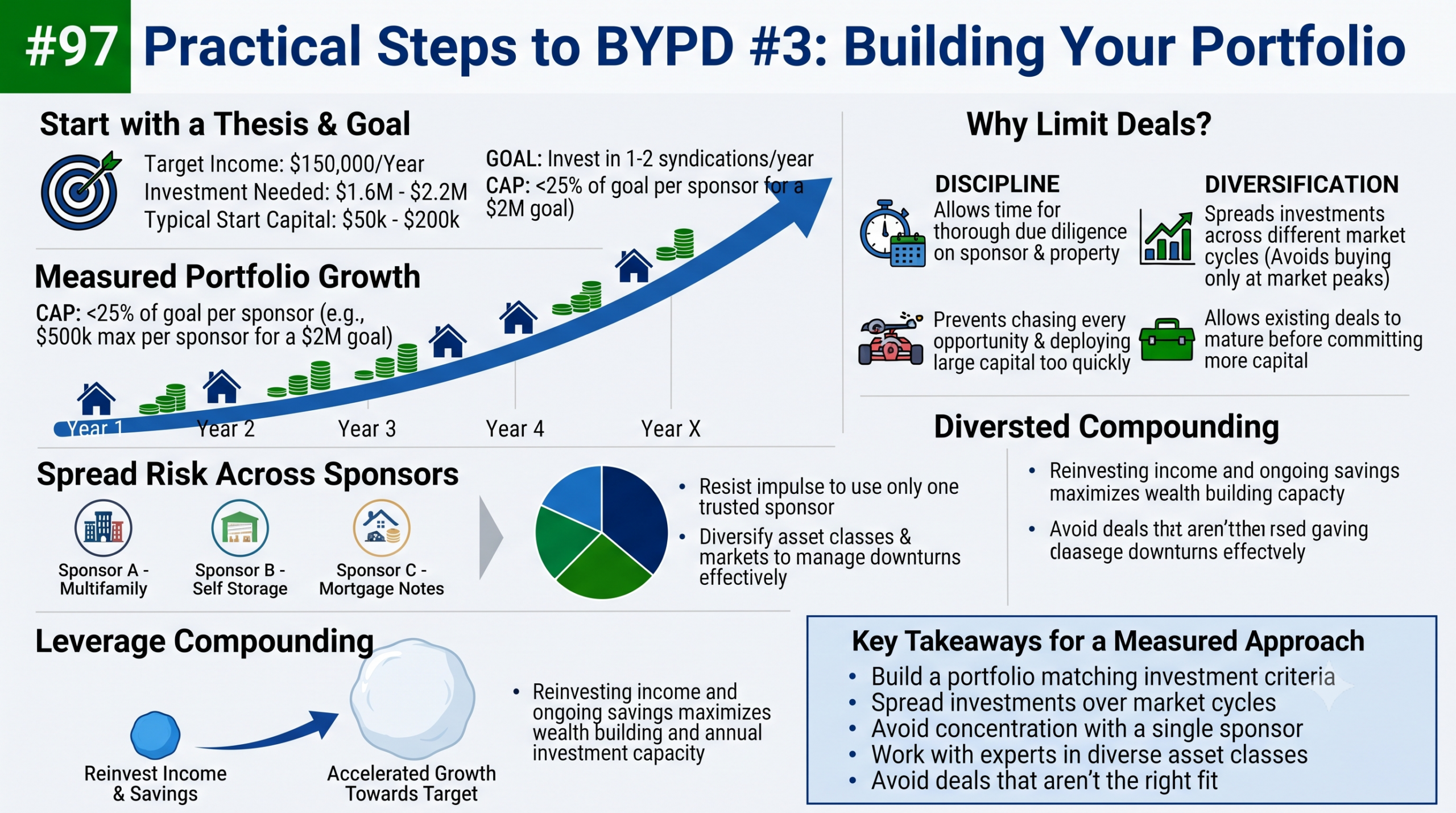
#97 Practical Steps to BYPD #3: Building Your Portfolio
Your investment thesis tells you what you are looking for and how much you need to invest to generate the cash flow you need to reach your goals. Building your portfolio is where that plan becomes real, and where patience separates a strong outcome from a costly one. Continuing the example from the previous chapter,…
-
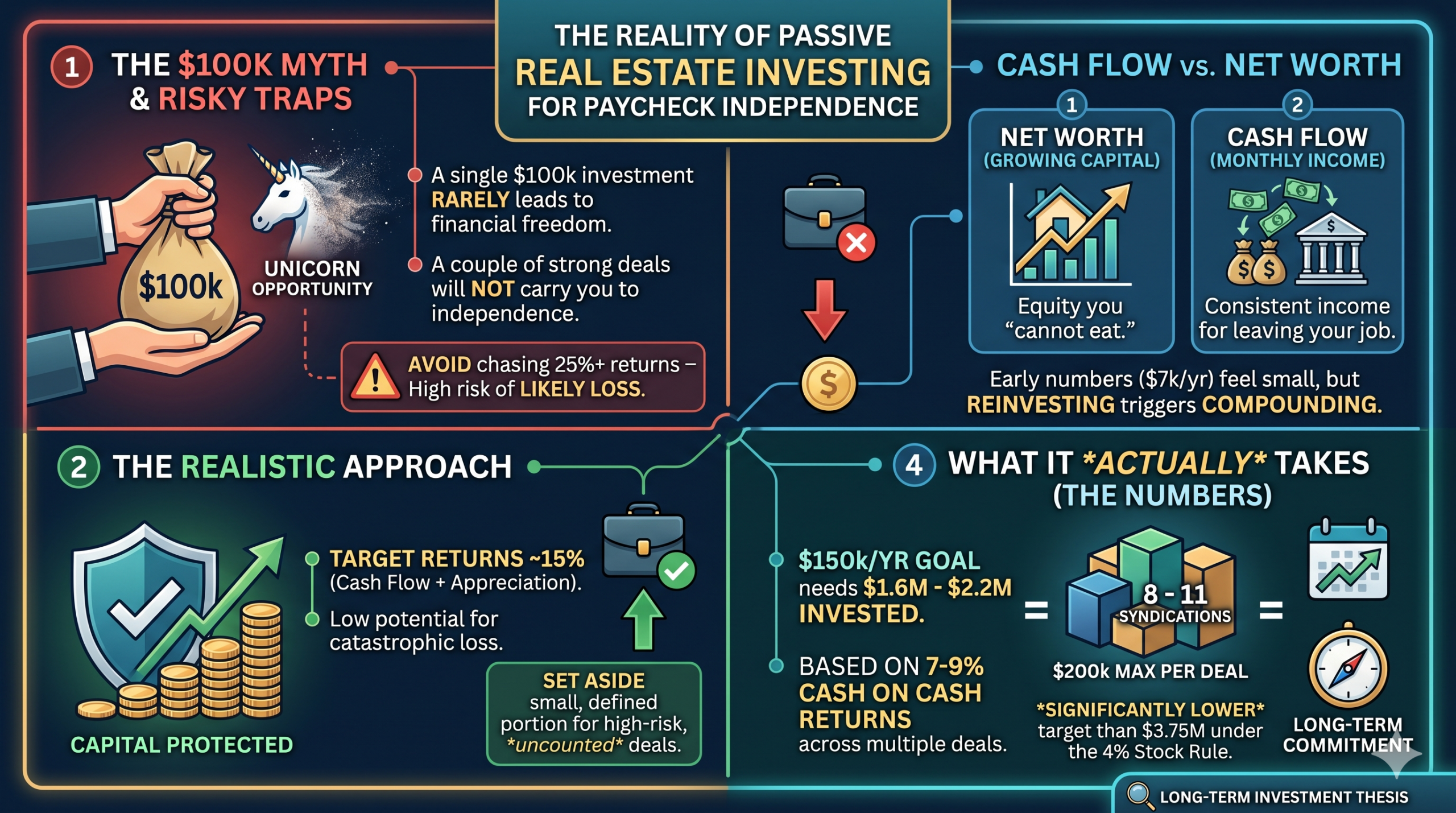
#96 Practical Steps to BYPD #2: Stay Realistic
A single $100,000 investment will not make you financially free. This is an extremely important lesson every passive investor must accept. 99.999% of the time, a single investment of $100k will not provide you financial freedom (the exception being an early investment in a unicorn opportunity). Too many new investors believe that a couple of…
-
#95 Practical Steps to BYPD #1: Get in the Right Room
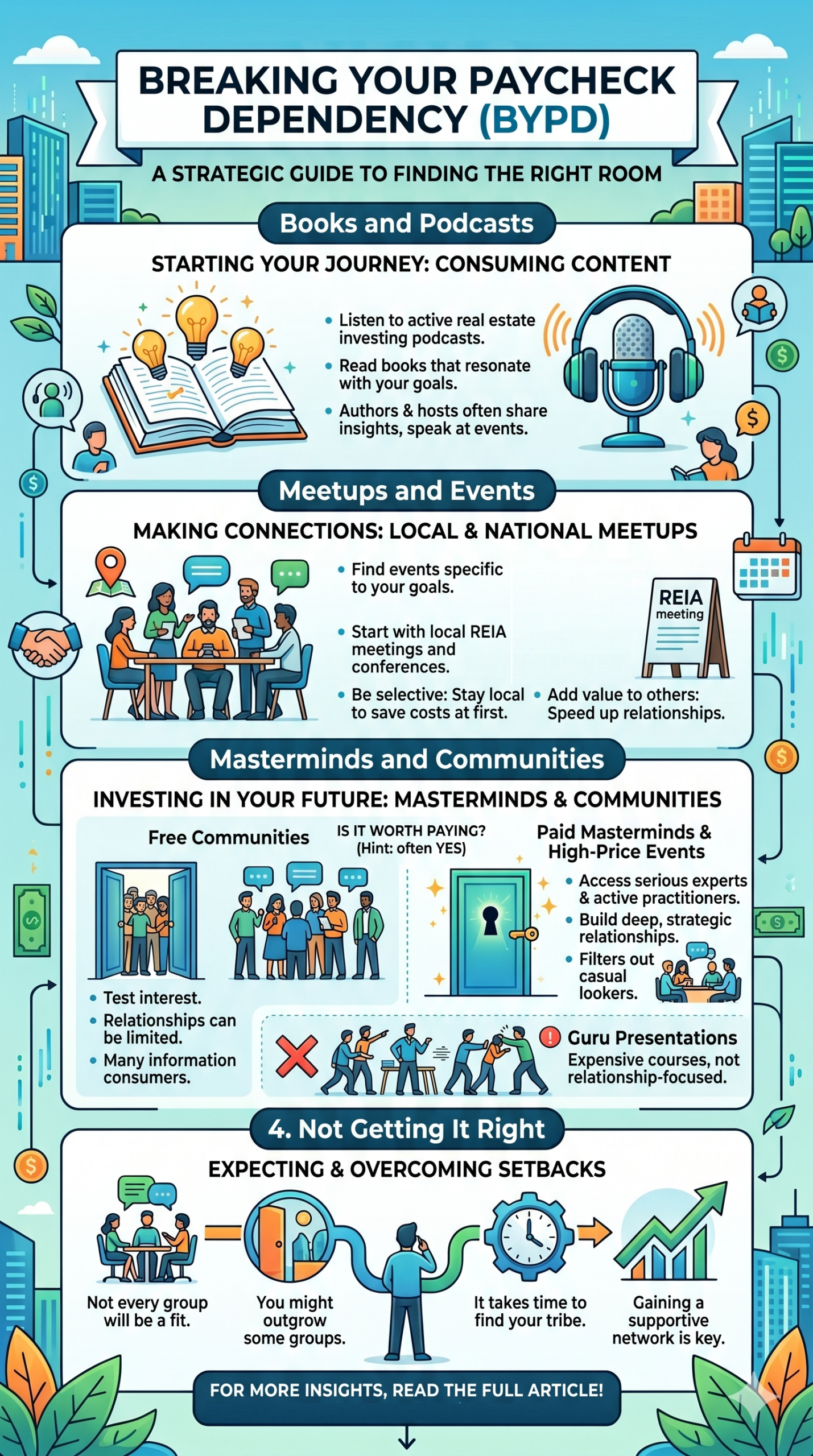
Breaking your paycheck dependency (BYPD) can seem like a daunting task. You have defined your investment thesis and know what you want to accomplish. The people you surround yourself with will determine how quickly you get there. That is why the next step is finding the right room: a group of people who have already…
-
#94 My Thoughts on Crowd Funding Sites
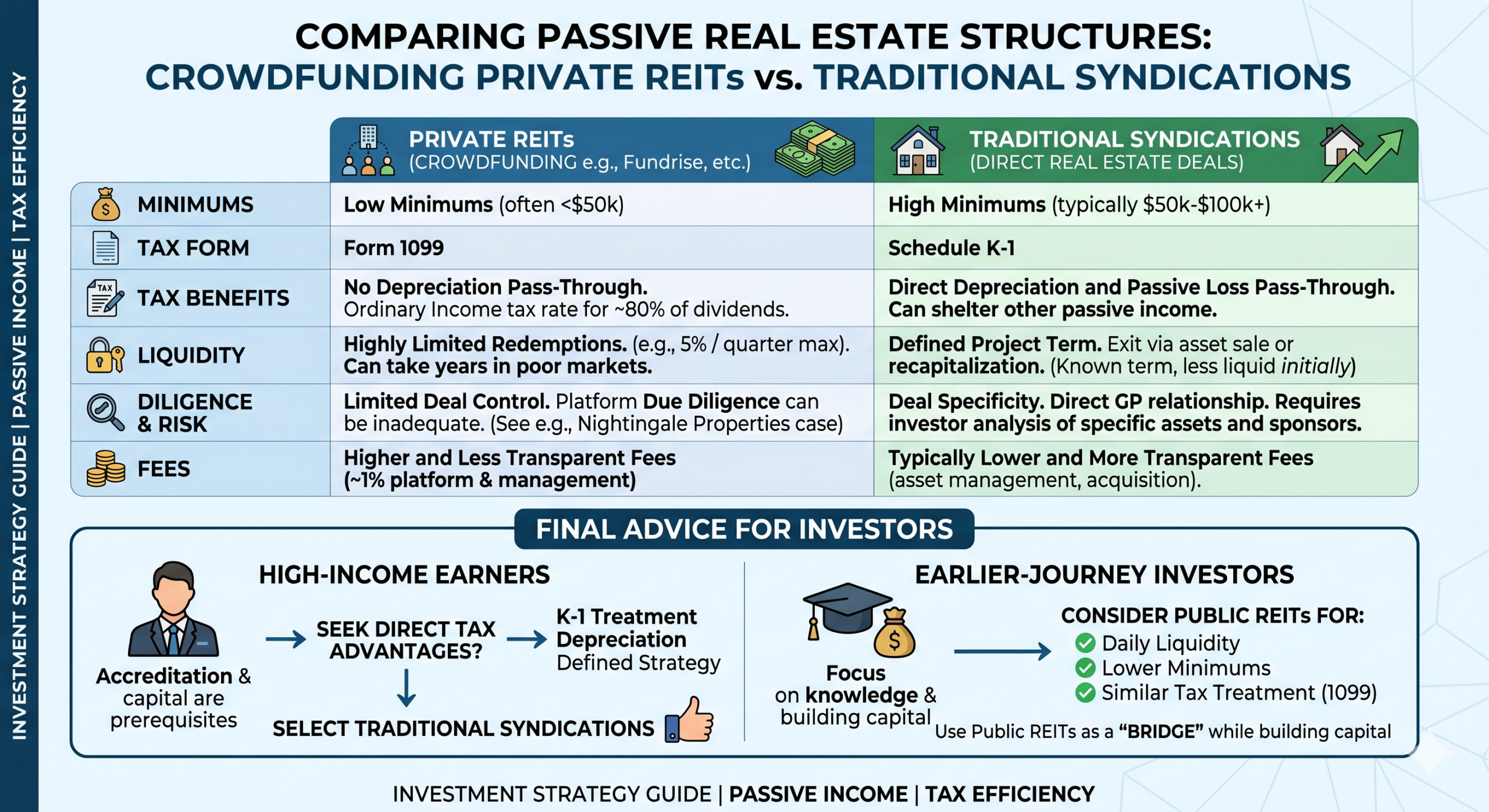
As someone who focuses on passive income investing, I receive regular questions about real estate crowdfunding platforms such as Fundrise and CrowdStreet. The appeal is easy to understand. These platforms market deals with low minimums, often well below the $50,000 to $100,000 typically required to participate in a syndication. They claim to vet sponsors before…
-
#93 Four Types of Diversification
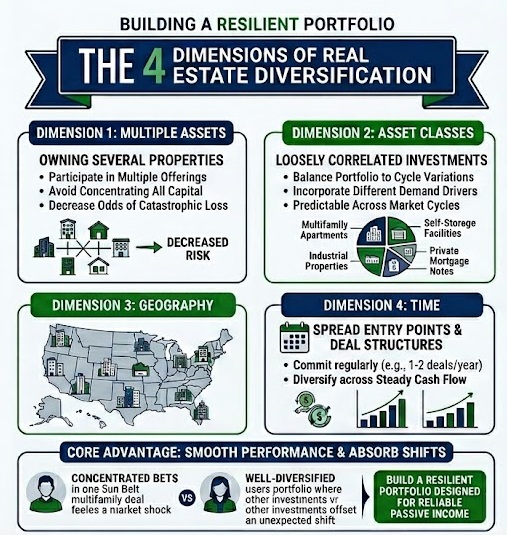
Most investors understand that diversification matters and that having a single asset in their investment portfolio is extremely risky. Fewer understand what it actually means to be well diversified. Holding a collection of technology stocks is not diversification. Owning several apartment buildings in the same city is not diversification. True diversification operates across four distinct…
-

#92 Book Review: The Five Types of Wealth
Most personal finance books operate from the unspoken assumption that financial wealth is the only kind worth building. They teach you to optimize your portfolio, minimize your tax burden, and compound your returns — useful tools, all of them. What they rarely ask is whether financial wealth can deliver the life you are trying to…
-
#91 Different Real Estate Asset Classes: Cross Cutting Strategies
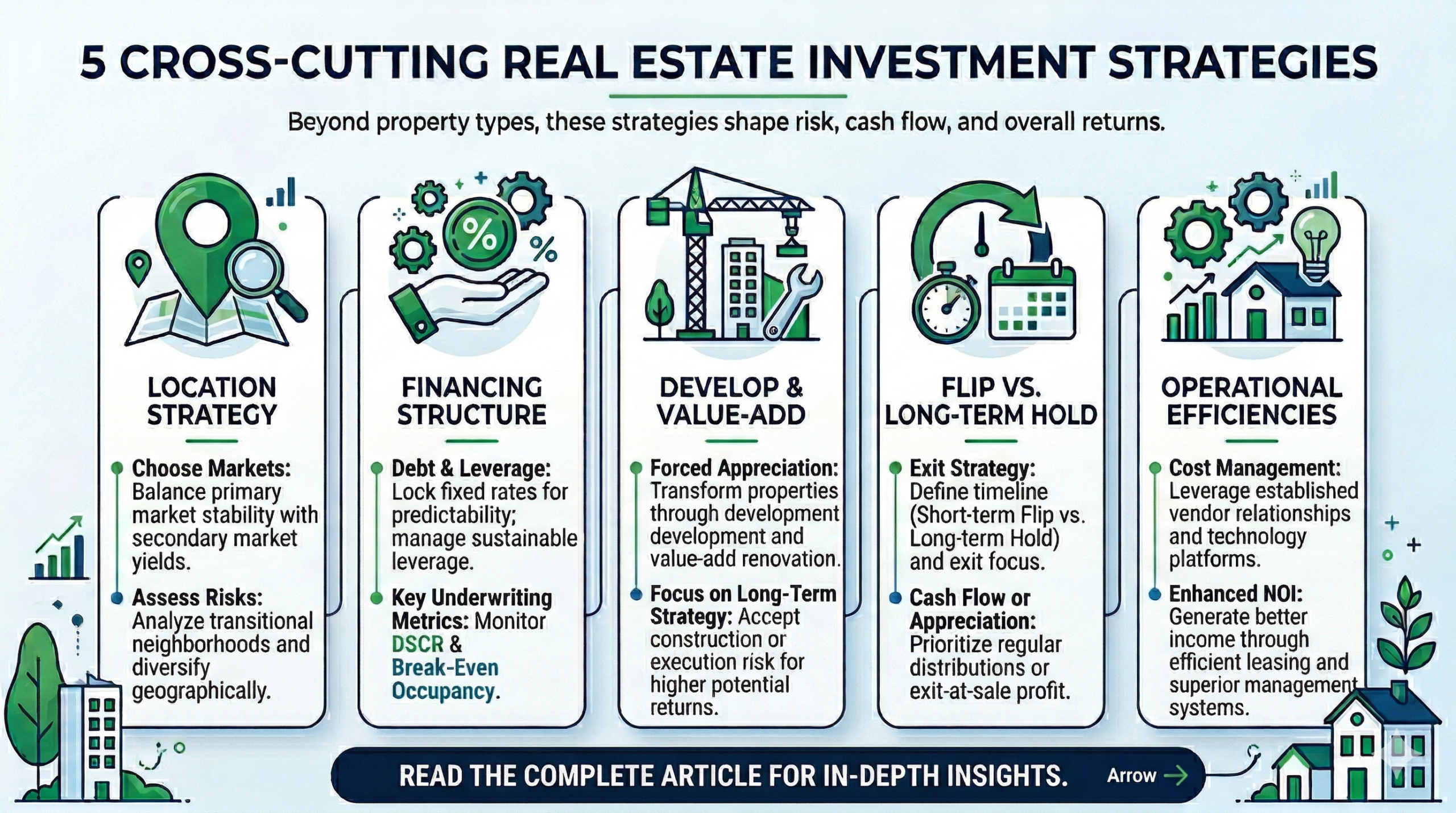
Identifying the type of property is only one way to break out asset classes. There are also a number of cross-cutting strategies that can be used independent of property type. These strategies cut across all asset classes and shape the deal structure, return profile, and cash flow characteristics of any specific investment. Two investors can…
-
#90 Different Real Estate Asset Classes: Commercial Real Estate
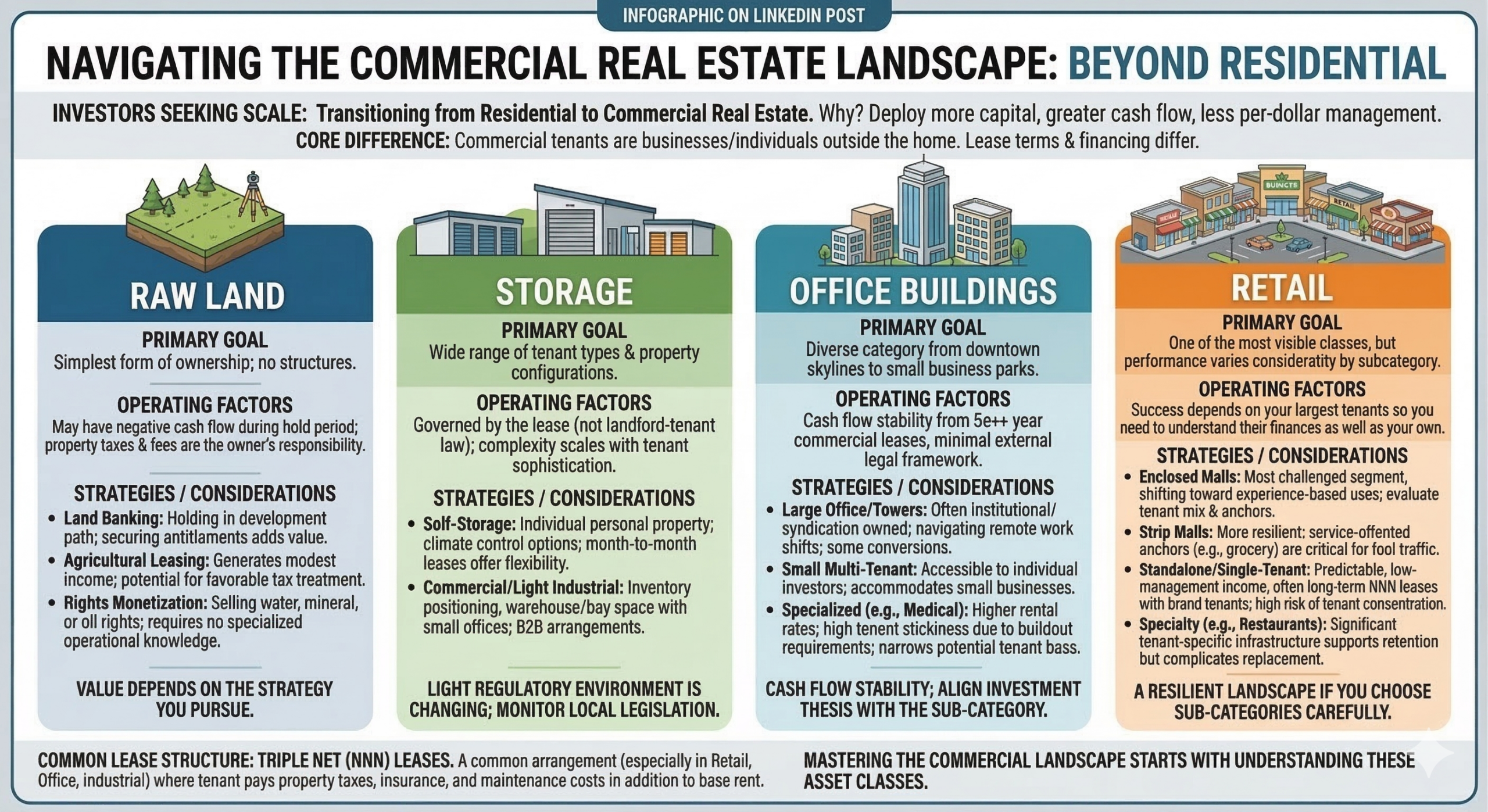
Most investors who transition from residential to commercial real estate do so because they are looking for scale. A single multifamily syndication can deploy more capital, generate more cash flow, and require less per-dollar management effort than a portfolio of single family rentals assembled over years. Commercial real estate makes that scale accessible, but it…
-
#89 Different Real Estate Asset Classes: Residential Real Estate
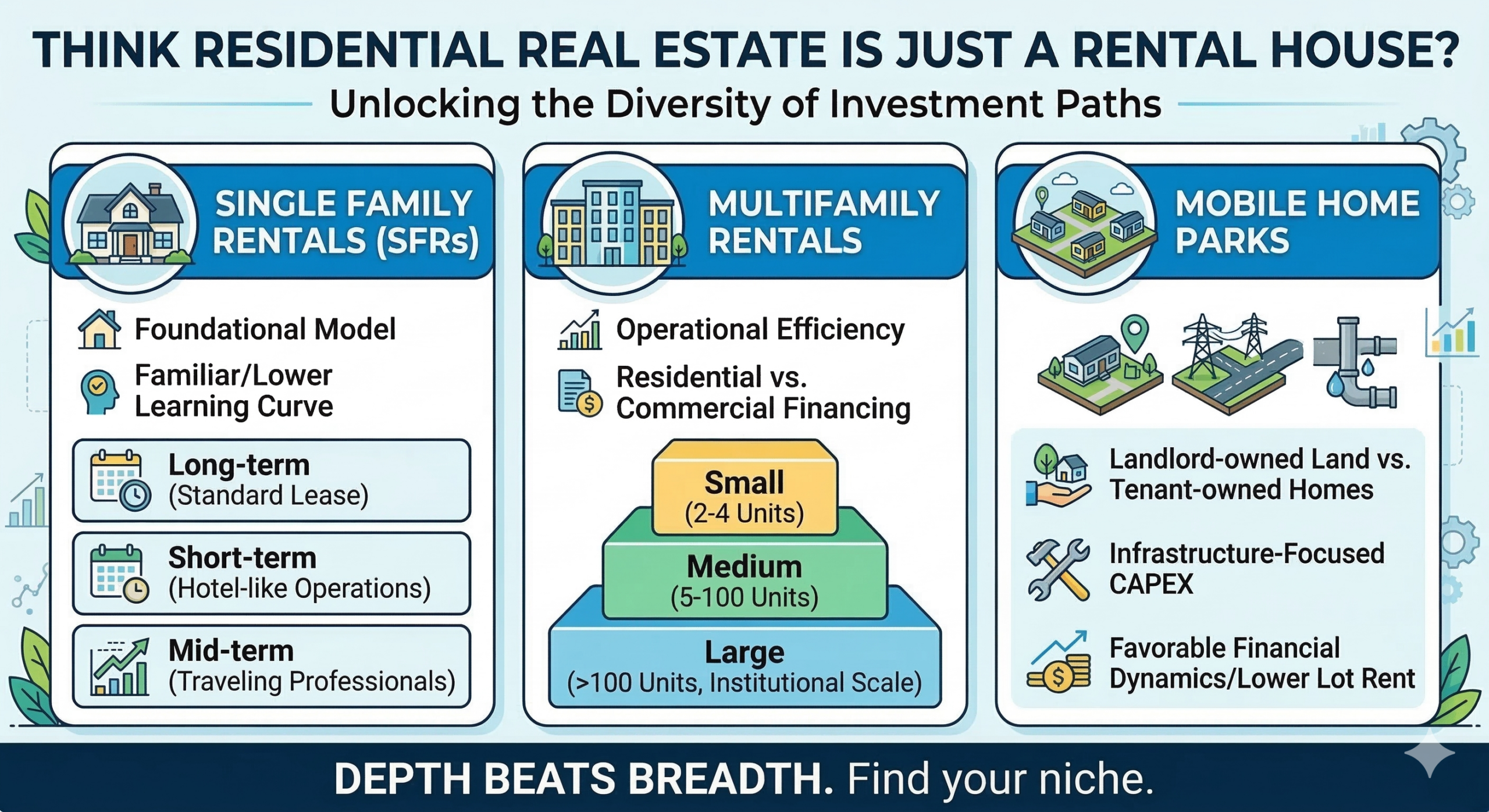
Most people think of real estate as a single investment category. When the topic arises, the conversation usually defaults to one image: buying a rental house and collecting monthly rent. This picture represents only a narrow slice of an asset class far more varied than most investors appreciate. Broadly speaking, you can break real estate…
-
#88 1031 Exchanges: Deferring Taxes to Accelerate Wealth
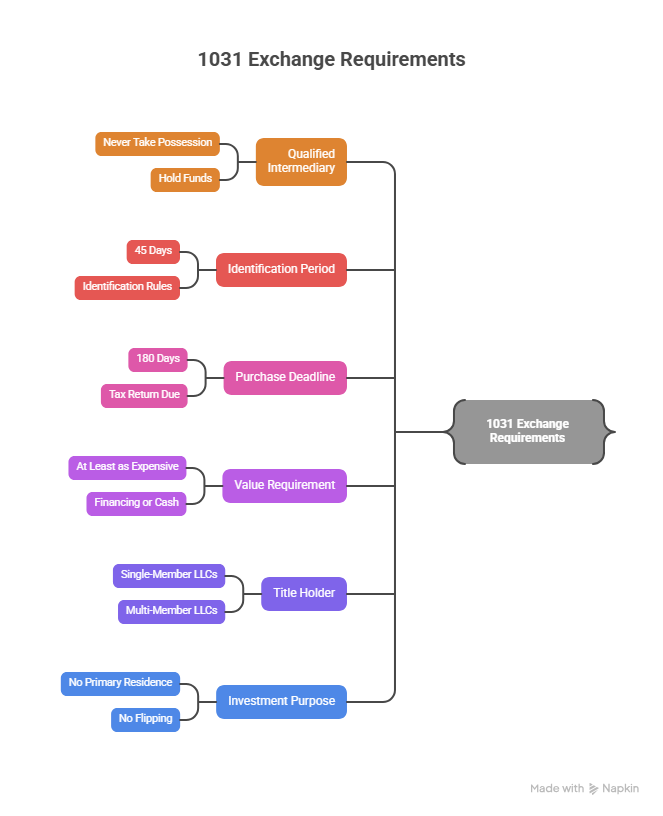
Outside of depreciation, the 1031 exchange is one of the most favorable tax treatments available to real estate investors. Named for Section 1031 of the Internal Revenue Code, a 1031 exchange allows an investor to sell a property and, if certain rules are followed, to roll any gains from that property into a newly purchased…
-
#87 Depreciation Recapture
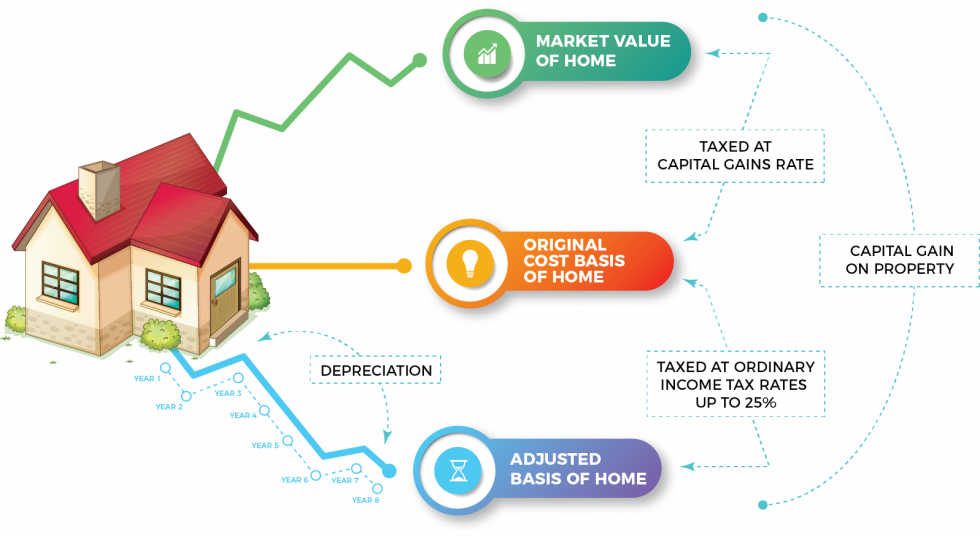
If you spend enough time around real estate investors and ask enough questions, eventually the topic of depreciation recapture emerges. This is a subject you need to understand if you want to avoid an unpleasant surprise when your deal closes and the tax bill arrives. As you likely know, one of the significant advantages of…
-
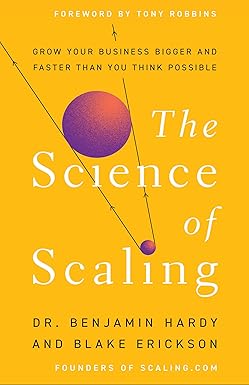
#86 Book Review: The Science of Scaling
The Science of Scaling by Benjamin Hardy and Blake Erickson offers a compelling framework for entrepreneurs who want to scale their businesses but struggle to identify the path forward. While written primarily for business owners, the core principles apply to building an investment portfolio capable of generating the passive income needed to break paycheck dependency.…
-

#85 The Differences Between Saving, Investing, and Speculating
People often use the terms saving and investing interchangeably. This creates real problems. When you treat fundamentally different concepts as the same thing, you make decisions based on faulty assumptions about risk, return, and control. Understanding the distinctions between saving, investing, and speculating is not academic. It is the foundation for building a portfolio that…
-
#84 Successful Investors Know What They Are Looking For
Through consulting calls and networking conversations with newer investors, one pattern emerges consistently. Many investors lack clarity about what they are looking for in a deal. Some pursue impossible deals: 30% IRR, 10% cash-on-cash returns, complete liquidity, and zero risk. These opportunities do not exist. If they did, institutional investors would jump on them before…